


21 October 2026
Community Through a Screen Interview with Orla Davey
Ahead of the opening of her first curated exhibition, Orla Davey talked with Studio KIND curator Laura Porter, about some of the themes within ‘Community Through A Screen’.
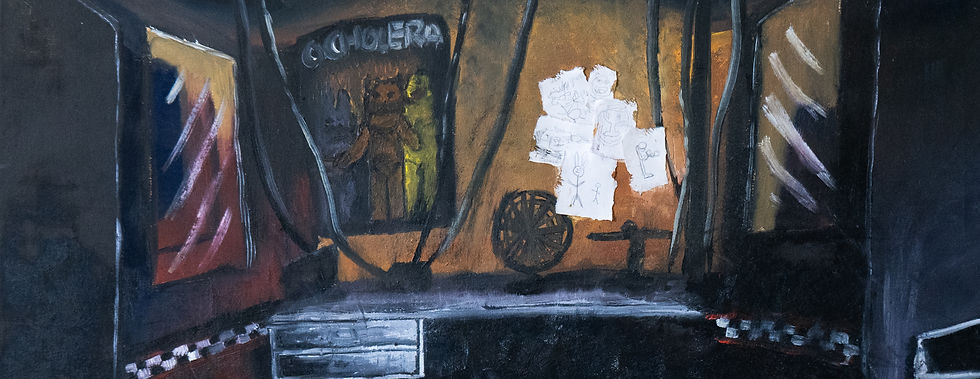
Ahead of the opening of her first curated exhibition, Orla Davey talked with Studio KIND curator Laura Porter, about some of the themes within ‘Community Through A Screen’.
This is your first curatorial project, which is very exciting, and you're currently studying on the MA Museum Studies course at Arts University Plymouth. What made you interested in curation?
During my photography A-level I found myself very interested in the way I wanted to present my work and became very fixated on using tactile and sensory engagement within the display. Then while studying photography at Falmouth University I found that my interest in the medium was more focused on the outcome and the presentation of the piece carrying through that interest in sensory stimulation within exhibiting. My time during my undergraduate study wasn’t easy for me; I was struggling with being undiagnosed with ADHD (which I later got help for) and I found it difficult to keep up with my peers in terms of workload and fell behind quite a bit during my second year. However, during all of that my friends asked me for help with their work - with placement, composition, display - and I found that I became really interested in continuing that into my career and felt like the interest I had surrounding art and creating came from that place of building experiences through sensory means, like I had during my A-levels.
How have your personal experiences with fandoms and digital communities informed your research into these topics?
Being a child with access to the internet from a young age meant I was bound to come across fandom one way or another. I think being Autistic and ADHD led me to being a very quirky child with a lot of niche interests, and I used to fixate on things and become very involved within online communities. The first fandom I remember being interested in was Five Nights at Freddy’s when I was 12 and I loved how the community came together to figure out puzzles and it created some gorgeous fan works as well. Since then I’ve been in and out of fandoms and have watched artists create gorgeous pieces of animation, crochet, paintings and so much more inspired by the content they loved. This has led me to ask why it’s being left out of the conversation around artistic expression, and why this huge part of everyday lives (internet culture and digital communities) is being ignored by museum and art gallery institutions when we are living in the age of the internet.
You mention that you're interested in making an argument for more internet culture representation within museum and art gallery institutions. How do you think these institutions can achieve that?
I think the best way we can form this representation is by focusing in on specific aspects of the internet. Instead of trying to tackle the entire internet I think that there are ways that museums can implement aspects of digital culture. For example, local museums can document how the internet has played a part in significant events like protests or movements, often times there is an element of digital outrage and planning through social media for these movements, and art galleries can use fan art from the local area similar to my exhibition to display different types of work. Bigger institutions can incorporate the way our history is being written through the internet within exhibitions. It would be a shame to miss out on a huge part of our current history because we haven’t considered how to integrate it into the way we display our history. During my research I did some questionnaires surrounding internet culture and there was a majority demographic interested in seeing their own digital experience reflected within museums and a lot of them felt that the internet isn’t forever and we need to find a way to document and preserve what we have. I wanted to deliver that through this exhibition through fan art, but documenting events such as the internet's response to the Black Lives Matter movement and the free Palestine protests, or even the current fight against data centres within Devon would make a lasting impact on the way we present internet culture.
Much of the work is still using traditional artistic methods, like painting and drawing. Why do you think hosting a physical exhibition about digital communities is important?
Having the recognition of digital cultures through physical mediums allows more people to access it in a way that is understood widely. The pieces being in a physical space also gives room for a celebration of the work and the digital communities in a space where it is understood. People can view the work in a collected space and understand it, celebrate it and connect to it in a way that is very difficult online. Digital media is very scattered and unless you know what you’re looking for online then you would miss out on many of the creative responses people have created. With a physical exhibition it is curated in a way in which people have the opportunity to view these works together.
This exhibition is open to young people from the age of 16 to 30. How do you think their experiences of digital communities may differ from people of an older generation?
I think being digitally native and being born during the internet era creates a different way of navigating the internet. Younger people have been using the internet since they were born in a way never seen before, it has become a huge part of the way in which young people go about their day to day lives. For older generations their experience of the internet is going to be different as a result; there were physical spaces for people to enjoy things and a more homogenous pop culture to experience. My main interest in asking young people to submit work comes from my interest in getting young people to engage with museums and art galleries, and in turn attempt to make museums and art galleries more current and relevant for everyone.
What has been your experience of being an emerging artist in North Devon?
I can’t say that it has been easy, I think being in such a rural area and having very little transport options has had a huge impact on my ability to find creative jobs. However, there are incredible communities that have been incredibly welcoming and inspiring. There has been so much encouragement from places like Studio KIND for me to create and to keep working.
How has your work at Studio KIND contributed to your interest in working in curation?
Being around artists constantly is an incredible experience for me. I first started working for Studio KIND right after I graduated from my undergraduate study and it has been the best place for my love of art and curation to blossom. Watching Laura and the way she curates and liaises with artists has helped myself and my interest in curating to become more refined. I think seeing such a range of art over the last year and a bit has also let me see the dynamics within curation and how to form different experiences and atmospheres within the space. I think being trained by George and then taking over the gallery photography allowed me to pay close attention to little details within exhibitions that tie pieces together, and I get to view everything twice - once as a viewer and then through the lens of a camera. I get to view every detail from every angle and for that I’m very grateful.
In the exhibition text you mention the ongoing debates around online communities and social media for young people. How do you think we can embrace digital communities whilst protecting young people?
I think there is a line between protection and censorship, for younger and older people alike there needs to be more education on how to protect themselves, how to spot scams/fishing and AI, and there needs to be education on why the internet is the way it is. A lot of the concern has come from younger people’s exposure to adult content but I think there are ways to educate people on the harmful effects this type of content can have. I also think opening a safe dialogue for people to raise concerns, talk about what they have experienced and discuss solutions is a good option for this. Young people shouldn’t have their freedom of expression changed just because of their age or where that expression lives - there should be better channels for them to do so without damaging mental health or their experiences in the real world.
The exhibition opens on Saturday 24th October, with an opening event from 3-5pm, and will continue through to Saturday 7th November, open Tuesdays to Saturdays 12-5pm.
For more information head to www.studiokind.org.uk/exhibitions/community-through-a-screen